

123 Creative Lane London, SW1A 1AA United Kingdom
Stop depending entirely on paid advertising to generate sales.
GAVEXA helps e-commerce businesses improve product visibility, attract high-intent shoppers, and turn organic search traffic into measurable revenue opportunities.
We build SEO strategies around your products, categories, customers, competition, and commercial goals.
Built for online stores that want sustainable growth beyond paid traffic
Commercial keyword strategy. Technical SEO. Product optimization. Transparent reporting

Paid advertising can generate immediate visibility, but it requires continuous spending.
When advertising budgets are reduced or campaigns stop performing, traffic and sales can decline quickly.
Meanwhile, customers are actively searching on Google for products, categories, comparisons, solutions, and brands.
When your store is not visible for those searches, your competitors have the opportunity to reach those customers first.
A strong e-commerce SEO strategy helps your store create an additional acquisition channel that can continue generating visibility alongside your advertising, email marketing, social media, and other growth activities.
Many online stores are built around design and product uploads without a clear search strategy.
Common problems include:
These issues can prevent search engines from understanding which products and categories are important and which pages should appear for valuable searches.
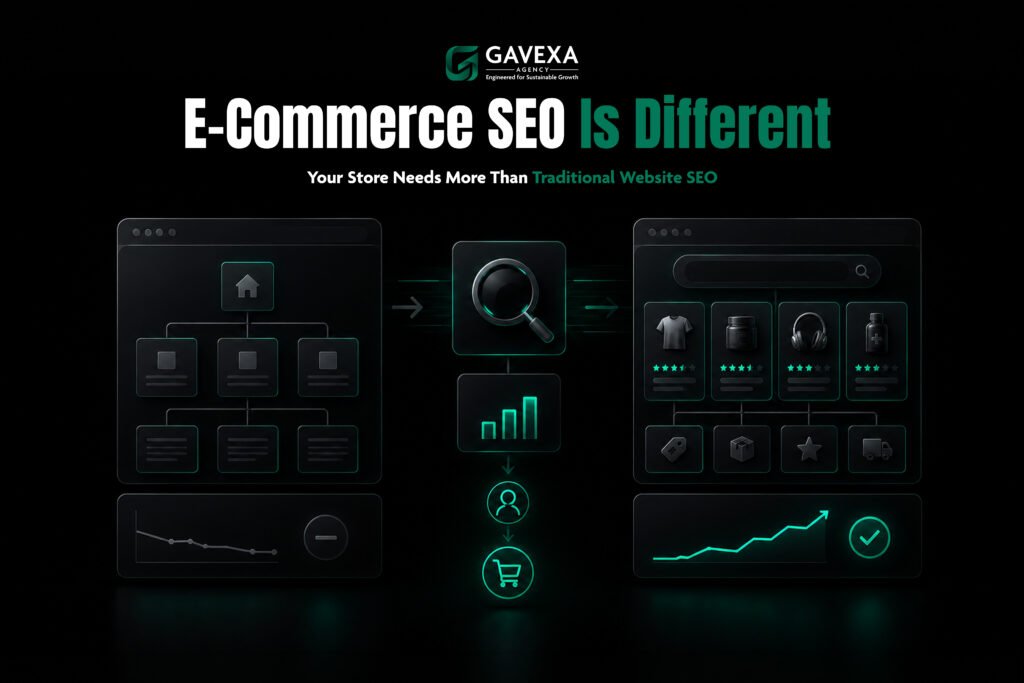
An e-commerce website may contain hundreds or thousands of products, variants, categories, filters, tags, images, and dynamic URLs.
That creates challenges that are less common on standard business websites.
A successful e-commerce SEO strategy needs to balance:
At GAVEXA, we approach e-commerce SEO as a connected commercial system rather than a list of isolated keyword tasks.
Our e-commerce SEO service connects four essential areas:
We identify what potential customers search for before and during the buying process.
We organize categories, collections, products, and internal links so important pages are easier to discover.
We improve category, product, brand, and content pages to better match customer intent.
We track visibility, traffic, conversions, and revenue to understand what is working and where further opportunities exist.
The objective is not simply to increase traffic.
The objective is to attract relevant shoppers and create more opportunities for organic traffic to contribute to sales.
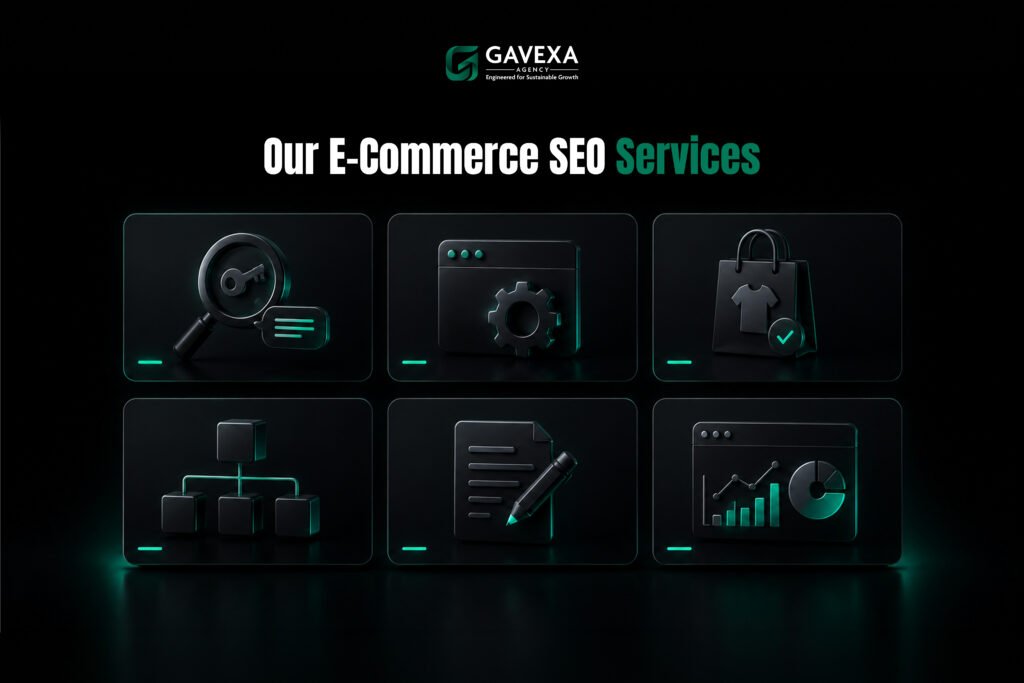
The exact scope is customized according to your platform, catalog size, market, technical condition, competition, and business goals.
We begin by reviewing the current condition of your online store.
The audit may include:
The result is a prioritized roadmap based on impact, urgency, effort, and commercial value.
We identify keywords that match the products you sell and the way your customers search.
Our research may cover:
We evaluate keywords based on relevance, intent, competition, search opportunity, product availability, and business value—not search volume alone.
Finding keywords is only the beginning.
We map each target keyword and search intent to the most appropriate page.
This helps prevent:
Every priority keyword should have a clear purpose and destination within the store.
Your website structure influences how customers and search engines discover your products.
We review and improve:
We aim to create a logical structure that supports product discovery, search visibility, and future catalog growth.
Category and collection pages are often among the most commercially valuable pages on an e-commerce store.
We optimize them through:
The goal is to make category pages useful to shoppers while clearly communicating their topic and value to search engines.
We optimize priority product pages to improve relevance, clarity, and purchase intent.
Product optimization may include:
We avoid simply inserting keywords into manufacturer descriptions.
Product pages should provide original, useful information that helps customers understand the product and make a confident buying decision.
Large and dynamic stores require careful technical management.
Our technical SEO work may include:
Technical recommendations are prioritized according to their potential impact and the capabilities of your e-commerce platform.
Product filters can improve the shopping experience, but they can also create large numbers of duplicate or low-value URLs.
We review:
We determine which filtered pages may deserve search visibility and which should be controlled to protect crawl efficiency and reduce unnecessary duplication.
E-commerce stores frequently generate duplicate or similar content through:
We create a clear canonical and indexation strategy to help search engines identify the preferred version of each page.
Where technically appropriate, we review or implement relevant product structured data.
This may include:
Structured data must accurately represent information that is visible and available on the page.
We also validate the implementation and identify errors or warnings that may affect eligibility for supported search experiences.
Depending on the platform and project scope, we can review the connection between your website data and product feed systems.
This may include:
Product feed management and paid shopping campaign management can be quoted separately when required.
Internal links help customers and search engines discover important pages and understand relationships between products and categories.
We create or improve links between:
We focus on making important pages accessible without creating forced or repetitive links.
Your product and category pages cannot target every stage of the customer journey.
We develop content opportunities that support customers before they are ready to purchase.
Content may include:
Each content asset should serve a clear search intent and connect naturally to relevant commercial pages.
Depending on the agreed scope, we can:
Content production volume and copywriting responsibilities will be defined clearly in the proposal.
Product images are essential to both the customer experience and search visibility.
We review:
Image optimization is implemented without sacrificing the visual quality required for e-commerce.
A large percentage of online shopping journeys begin or happen entirely on mobile devices.
We review:
SEO and user experience should support each other rather than operate as separate activities.
Ranking improvements are valuable only when they contribute to meaningful business outcomes.
We review the relationship between organic traffic and:
Conversion rate optimization may be delivered as part of the agreed SEO scope or through a separate CRO engagement.
We review or configure relevant measurement tools to improve reporting accuracy.
This may include:
Tracking availability depends on the website platform, consent setup, integrations, and existing data quality.
We analyze relevant organic competitors to understand:
Your SEO strategy is built around your own business objectives rather than copying competitors blindly.
For suitable projects, we develop a responsible authority-building strategy.
This may include:
We do not use automated, irrelevant, or manipulative link-building methods that may create unnecessary risk.
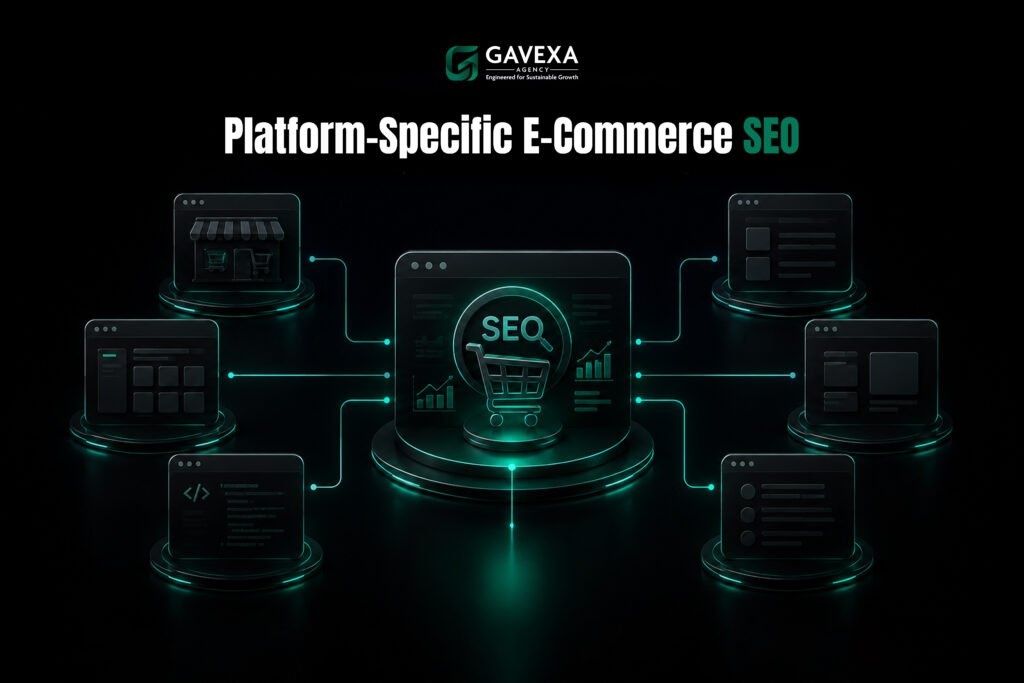
We can work with stores built on platforms such as:
The strategy and technical implementation will depend on the capabilities, restrictions, applications, theme, hosting environment, and development setup of your platform.
Before starting, we review what can be implemented directly and where developer support may be required.

A successful e-commerce SEO strategy can help your store create:
SEO does not replace every other marketing channel.
It strengthens your overall acquisition strategy by helping potential customers discover your products while they are actively searching.
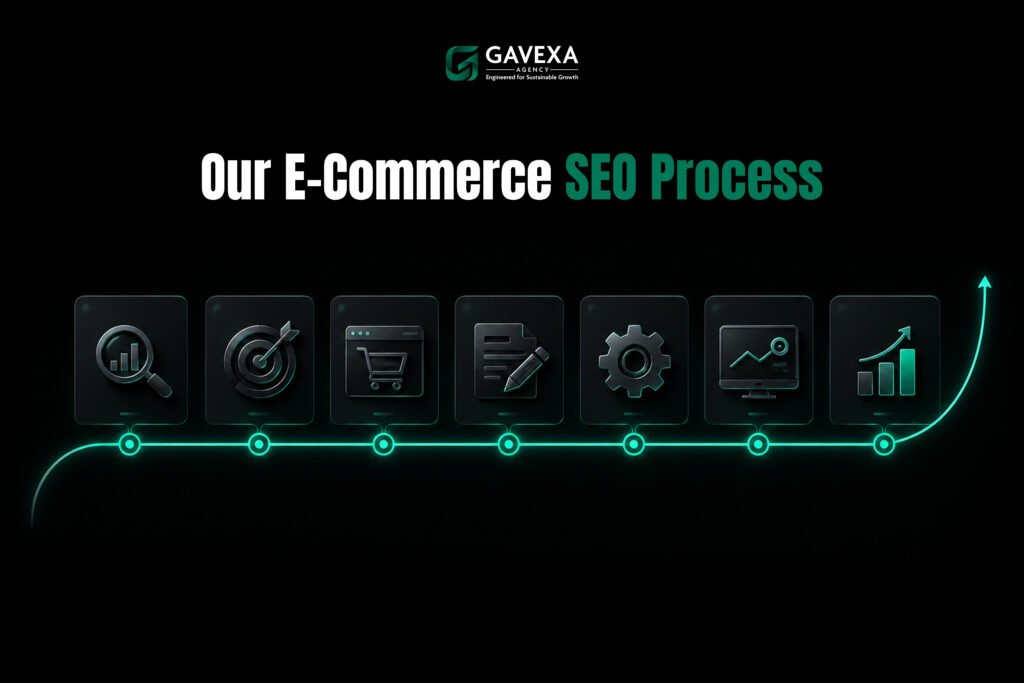
01
We learn about your business, products, customers, margins, markets, competitors, seasonality, marketing channels, and growth objectives.
02
We review the available data and confirm whether organic traffic, conversions, transactions, and revenue are being measured accurately.
03
We analyze the store’s technical condition, architecture, categories, products, content, backlinks, search visibility, and existing performance.
04
We identify commercial, transactional, and informational search opportunities relevant to your product catalog.
05
We create a roadmap that prioritizes actions according to impact, commercial value, urgency, required resources, and implementation difficulty.
06
We resolve or coordinate priority technical improvements affecting crawling, indexing, duplication, speed, structured data, and website structure.
07
We optimize priority categories and products according to keyword opportunity, search intent, product value, and conversion potential.
08
We create or improve content that supports product discovery, customer education, internal linking, and commercial pages.
09
Where included, we work on relevant authority and link acquisition opportunities to strengthen the website’s credibility.
10
We monitor results, analyze opportunities, update priorities, test improvements, and expand the strategy based on reliable performance data.
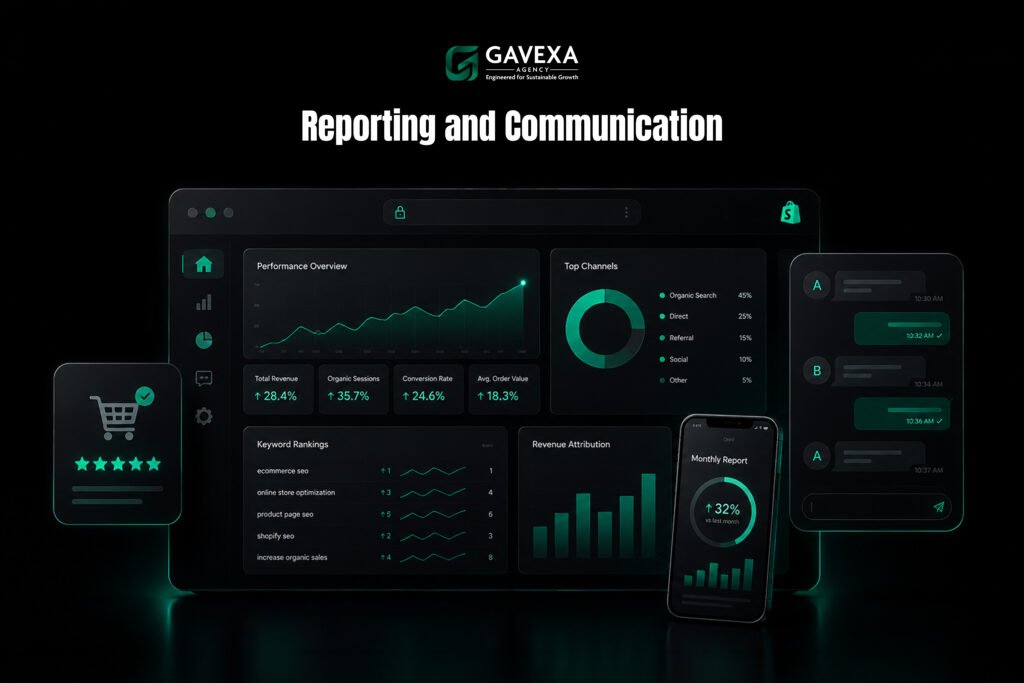
Our reporting may include:
We explain what changed, why it matters, what was completed, and what should happen next.
We avoid presenting large numbers without context.
We understand that product, category, inventory, platform, and conversion requirements make e-commerce SEO different from standard website SEO.
We prioritize searches that are relevant to your products, customer journey, and commercial goals.
We combine technical SEO with category strategy, product optimization, content, user experience, and measurement.
We use reliable data to identify problems, prioritize actions, and assess performance.
You receive clear explanations of what we are doing, why we are doing it, and how it connects to your objectives.
We focus on long-term improvements rather than shortcuts that may create future risk.
SEO is not treated as a one-time checklist. We review performance, respond to new opportunities, and improve the strategy as your store, market, and competition evolve.
We understand how SEO interacts with paid advertising, content, product feeds, social media, email marketing, conversion optimization, and website development.
Our e-commerce SEO service is suitable for:
Brands with strong products but weak search visibility
Our service is best suited for businesses that:
We do not use shortcuts, automated spam, purchased ranking guarantees, or low-quality mass content.
Our role is to build the strongest possible strategy and execution system while remaining honest about the factors no agency can control.
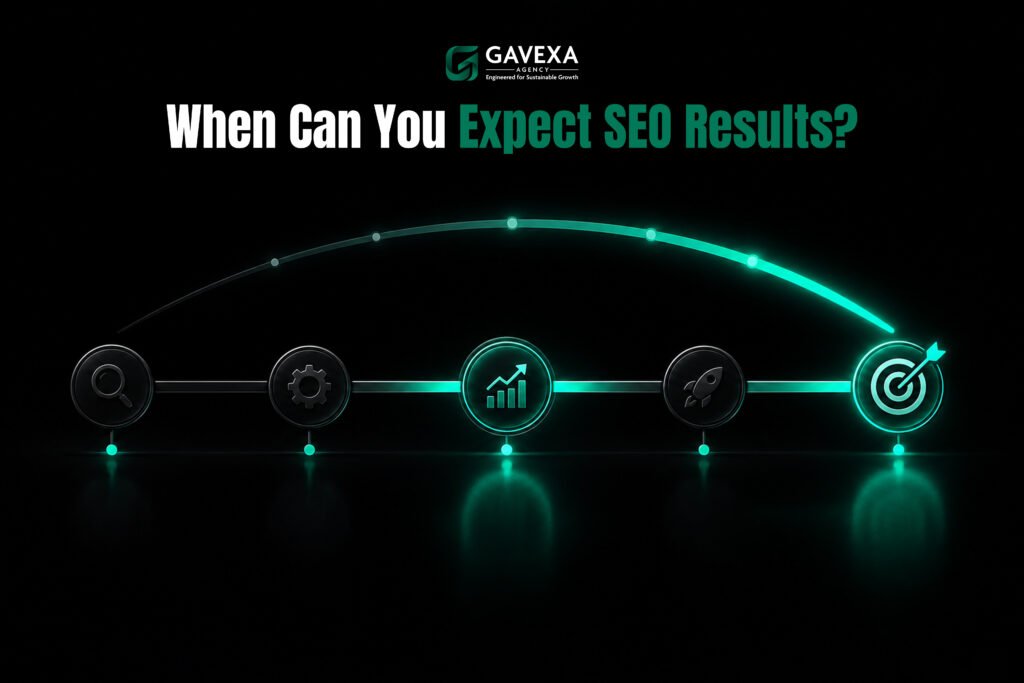
There is no single timeline that applies to every e-commerce store.
Some changes may be discovered and processed relatively quickly, while broader improvements may take longer to influence search visibility and commercial performance.
The timeline can be affected by:
During the early stages, progress may first appear through:
We set realistic expectations after completing the audit and reviewing your market.
No responsible SEO agency can guarantee:
We guarantee a professional process, transparent communication, documented work, responsible methods, and a strategy aligned with your agreed business objectives.
Let’s build an e-commerce SEO strategy that helps more potential customers discover your products, understand their value, and purchase from your store.
GAVEXA will review your current performance, identify the most valuable opportunities, and create a prioritized roadmap aligned with your business goals.
E-commerce SEO is the process of improving an online store’s technical structure, categories, product pages, content, internal links, and authority to increase its visibility in organic search results.
The goal is to help relevant shoppers discover the store and its products when searching online.
E-commerce websites typically have larger catalogs, product variants, filters, category hierarchies, dynamic URLs, stock changes, duplicate content risks, and complex tracking requirements.
E-commerce SEO must manage these challenges while also supporting product discovery, customer experience, and revenue goals.
There is no fixed timeline.
Some technical changes may be processed relatively quickly, while meaningful growth across competitive product and category searches may require sustained work over several months.
The expected timeline depends on your store’s current condition, competition, authority, catalog size, implementation speed, and available resources.
No.
Google rankings are controlled by search engines and influenced by many changing factors.
We do not guarantee specific positions. We create and implement a responsible strategy designed to improve your store’s technical quality, relevance, visibility, and organic growth potential.
SEO can create more opportunities for sales by helping relevant shoppers discover your products and categories.
Actual revenue also depends on product demand, pricing, availability, website experience, offers, trust, shipping, customer service, competition, and conversion performance.
SEO and paid advertising serve different purposes and can work together.
Paid advertising can provide immediate exposure, while SEO can help build longer-term organic visibility.
The right channel mix depends on your goals, margins, products, budget, market, and growth stage.
Yes.
We can optimize Shopify stores within the technical capabilities of Shopify, the selected theme, installed applications, and available development resources.
Yes.
We can work with WooCommerce stores and review their website structure, technical setup, products, categories, plugins, hosting, performance, content, and tracking.
Yes.
We can audit and optimize an existing store, whether it has received previous SEO work or is starting from the beginning.
Yes.
We can optimize priority product pages through keyword targeting, content, metadata, headings, product information, images, internal links, structured data, trust elements, and user experience recommendations.
Yes.
Category and collection pages are often central to e-commerce SEO because they can target broader commercial searches and help customers explore multiple relevant products.
Product description writing or rewriting can be included in the agreed scope.
The cost and timeline depend on the number of products, available information, required research, and content depth.
Yes.
Depending on the agreed plan, we can develop content strategies, briefs, buying guides, comparisons, frequently asked questions, category content, and other assets that support customers and commercial pages.
Yes.
Technical SEO is a core part of the service and may include crawling, indexation, canonical tags, duplicate content, sitemaps, URL parameters, filters, pagination, structured data, speed, mobile usability, redirects, and website architecture.
Implementation depends on your platform, website access, project scope, and required development work.
Some improvements can be implemented directly by our team. Others may require collaboration with your developer, platform provider, or internal technical team.
Implementation responsibilities will be defined before the project begins.
We can audit, configure, or coordinate relevant product structured data where supported by your website and platform.
The information in the structured data must match the actual product information visible on the page.
We can review or support the alignment between website product data and Google Merchant Center feeds when included in the project scope.
Full feed management and paid Shopping campaign management may be provided separately.
We can identify duplication issues and develop a strategy involving original content, canonical tags, indexation controls, redirects, page consolidation, or other suitable methods.
The correct solution depends on how and why the duplicate pages are being created.
The correct approach depends on whether the product is temporarily unavailable, permanently discontinued, replaced by another product, or expected to return.
We review the page’s traffic, backlinks, rankings, replacement options, and customer value before recommending whether to keep, redirect, update, or remove it.
Yes.
We can create or review the SEO migration plan, including URL mapping, redirects, metadata, canonicals, internal links, sitemaps, tracking, testing, and post-launch monitoring.
SEO involvement should begin before the new store is launched.
Relevant authority and link acquisition may be included depending on the strategy and agreement.
We focus on quality, relevance, legitimate relationships, useful content, and sustainable opportunities rather than mass-produced or manipulative links.
We may track organic visibility, impressions, clicks, keyword coverage, landing page performance, product and category traffic, conversions, transactions, and organic revenue.
Reporting depends on the accuracy and availability of your tracking systems.
The reporting frequency will be defined in your proposal.
Ongoing SEO engagements commonly include scheduled reporting and strategy reviews, supported by communication about completed work, current performance, priorities, and next steps.
The cost depends on the store’s size, platform, catalog, markets, competition, technical condition, content requirements, implementation needs, and project scope.
After reviewing your store and goals, we provide a tailored plan and quotation.
An audit or migration review can be delivered as a defined project.
However, competitive organic growth usually requires ongoing optimization, content development, technical maintenance, analysis, and adaptation as products, competitors, customer behavior, and search systems change.
This service is best for e-commerce businesses that want to reduce overdependence on paid traffic, improve product visibility, attract relevant shoppers, and build a sustainable organic acquisition channel.
Our team will answer all your questions. we ensure a quick response.
Copyright © 2026 All Rights Reserved.